


Fractionally Reserved Crypto
This is a cross-post of the X article originally published by @_yakovsky.
A balance sheet can monetize two things: (a) capital and (b) the capacity to commit capital.
DeFi has always paid for the former. Anyone can now rent out the latter, permissionlessly and at scale.
I discuss why this is a worthwhile pursuit in the first place, why it hasn't existed before in crypto, and how the end-state brings a new kind of fractional reserve to DeFi. Hopefully by the end of it you will have enough to let your imagination run wild as far as what becomes possible.
Original Bargain
DeFi made a tradeoff early on to replace bilateral trust with collateral inside a contract. This gave hard execution guarantees and as a result atomic settlement, but it gives up the ability to make credible claims on capital sitting elsewhere and the significant capital efficiency benefits that come with it. This prices out every single instrument premised on a promise for capital at a future date, which turns out to be a large portion of the traditional and shadow banking system. In banking terms, DeFi imposed a 100% reserve requirement on itself.
Finance allocates capital across (a) time and across (b) future states of the world.
Lending allocates across time: you give cash now in exchange for repayment later. Broadly speaking it fits quite neatly within the original tradeoff: capital enters a contract, collateral is posted, and the tx settles atomically while liquidators enforce the loan over time. The protocol therefore relies on collateral and liquidation risk rather than a borrower's willingness or ability to repay.
Commitments ("promises") operate across future states of the world. They promise cash if a particular future materializes, and most are not fully funded when that promise is made (nor do they need to be). This creates significant capital efficiency since the seller can keep the capital productive elsewhere until it is called. Further, a diversified book can support far more notional than it could fund all at once because promise triggers are not necessarily correlated, and you can collect commitment fees on all of it. Once the liquidity held against those promises falls below their face value, the same fractional-reserve logic banks use against deposits appears on the commitment side too (more on this later). This efficiency introduces counterparty risk. Traditional finance makes these promises credible through large balance sheets, ratings, reputation, and ultimately legal enforcement.
In order to enter a new plane of financial innovation, one must reopen the bargain and give up hard execution guarantees for capital efficiency, then make the promise credible with softer cryptoeconomic guarantees. You enter an entirely new design space once you swallow that pill.
Traditional commitments
A commitment is a promise to fund on agreed terms if specified conditions are met. These include instruments such as revolvers, delayed-draw loans, warehouse facilities, liquidity facilities, LP commitments, standby purchase agreements, standby letters of credit, and other broader guarantees.
Commitments exist because transactions often need certainty before they need cash. A credible promise to fund, pay, or stand behind an obligation lets entities coordinate and act today in a particular way that they wouldn't have been able to otherwise. TL;DR it makes a future balance sheet usable in the present.
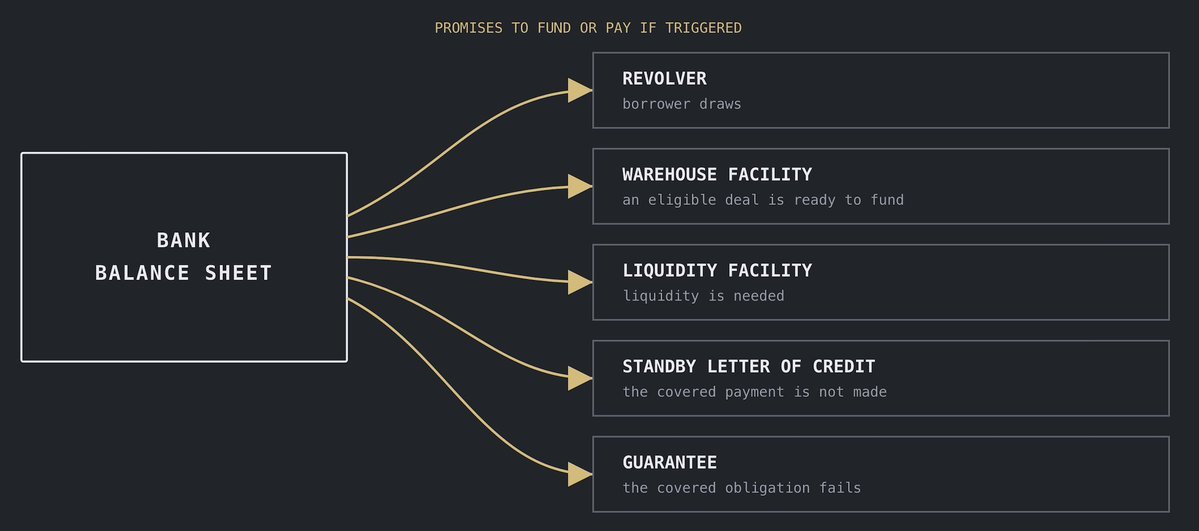
A commitment is unfunded because of a timing mismatch:
t0 = the date funding certainty is required
t1 = the date the amount and timing of the obligation become known
t2 = the date cash must settle
Someone must make a credible promise at t0, even though the final obligation may not be known until t1. Funding the entire amount at t0 eliminates the uncertainty but leaves the money idle. Instead the promisor commits at t0 and funds later.
The promise must be credible. Depending on the instrument, failing to deliver at t2 can result in failed closing, a broken forward-flow agreement, delayed redemption, or losses in the case of SBLCs.
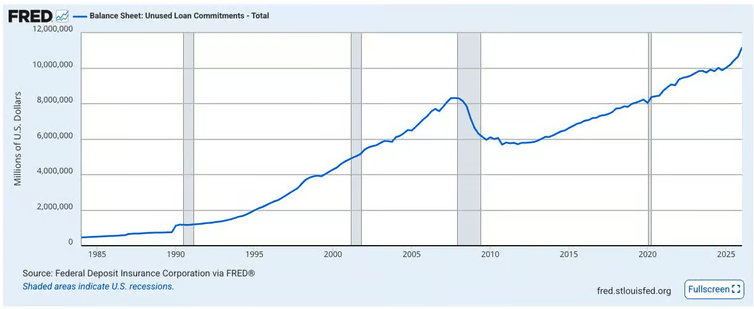
As of June 30, 2026, FDIC-insured institutions reported $11.34 trillion of unused loan commitments. Global private capital had approximately ~$4T of cash as of March 2025 (capital committed to funds but not yet invested).
Crypto :: Commitments
Crypto already had contingent claims: insurance cover that paid after smart contract hacks and restaked collateral that could be slashed after validator performance failures. But these claims were funded from the capital provider's perspective. They never depended on the provider producing more capital later from outside the system.
Crypto has never built a credible claim on capital that remained somewhere else for two reasons: a smart contract cannot summon capital it does not control, and the early use cases gave capital providers little reason to accept the obligation in the first place, fully-funded or otherwise.
Smart contracts cannot summon capital it does not control
A contract can only seize or transfer what it holds or has approvals for. As such, at first glance this may seem like unsolvable problem.
However this is a tractable problem if you trade atomicity for capital efficiency and make the promise credible with softer cryptoeconomic guarantees ie. margin slashing, reputation, and statistical diversification under explicit assumptions. That can make the promise credible enough, but only if the underlying commitment is worth buying and selling.
Why the early use cases did not support an unfunded market
There are three broad triggers for a commitment: (a) insurance / performance triggers (b) liability / redemption triggers (c) deployment triggers
Insurance and performance triggers: protocols such as Nexus Mutual had real buyer demand at the right price, but supplying the capacity was just a bad trade. Capital had to be supplied upfront and correlations across claims rose precisely when protocols and markets were already under stress. This has been discussed ad nauseam. Making the obligation unfunded would not change the trigger and would simply add leverage to correlated tail risk.
Restaking from EigenLayer also fits under this umbrella. Stakers pledged ETH as slashable collateral against failures by other networks. Making the commitment unfunded would improve its capital efficiency, but it would not create customers for the security being sold. Restaking was a failure for its initial use-case, but its core premise of multiplexing one pool of capital across many networks accidentally stumbled onto the bedrock of the financial system. Symbiotic recognized this and began applying the same idea to financial triggers such credit guarantees and RWA redemptions.
Liability and redemption triggers: most early protocols held largely liquid backing, so a liquidity facility had nothing to do on the happy path and was really only triggered in a tail case after an extremely conservative liquidity buffer had been exhausted. In early DeFi, this would generally correspond to a depeg or backing impairment ie. the protocol itself was moving toward insolvency. This differs from scenarios where you have aggressive liquidity buffers + sound but illiquid assets where a liquidity enhancement can be fair deal under certain covenants.
Deployment triggers: the provider delivers cash because an asset is ready to fund and receives a funded exposure in return. This is a structurally new use-case. Early DeFi had little use for that promise. Lending markets generally involved immediately available collateral, atomic borrowing, and instantly deployable positions. Nothing had to be originated, warehoused, or scheduled, so there was no gap between the point when funding certainty was needed and the point when the money could be deployed.
The absence of an unfunded commitment in 2020 is therefore not surprising. The product requires DeFi to move beyond atomic overcollateralized lending and start managing probabilistic future balance sheets which we are beginning to see. There's already around ~$7.8B in value across private credit/specialty finance according to RWA.xyz. Credit deals need capital committed before they are ready to fund and the backing assets are also generally sound but illiquid because they are deployed productively - this creates a happy path use-case for an unfunded commitment. Tokenized credit is now large enough for this market to exist.
Levered Callable Capital (LCC)
LCC is a subprotocol built by 3Jane internally to directly address our own +$200m pipeline in warehouse and forward-flow deals.
LCC is a market for balance-sheet capacity. A lending protocol's resource is capital. LCC's resource is promises. There are two core components:
(a) DeFi users post margin against a larger promise. A user may stake 7.5% margin against the total commitment they agree to deploy USDC into USD3. For example, $1 of margin backs a $13.33 commitment, equivalent to an initial 13.33x PLVG factor for launch. In return, they receive a promise fee. They earn levered yield on posted margin with no direct credit exposure while being able to productively deploy the unfunded capital across DeFi.
(b) 3Jane can call up to the total notional unfunded commitment. LCC calls can be partial, are announced with a nine-day funding window, and are driven by deals closing rather than market stress. If users do not fund, up to all of the staked margin is slashed and auctioned to backstop the shortfall. Backstop bidders can then step in, fund the call, and earn the margin incentive. Any surplus after the auction clears is returned to the staker.
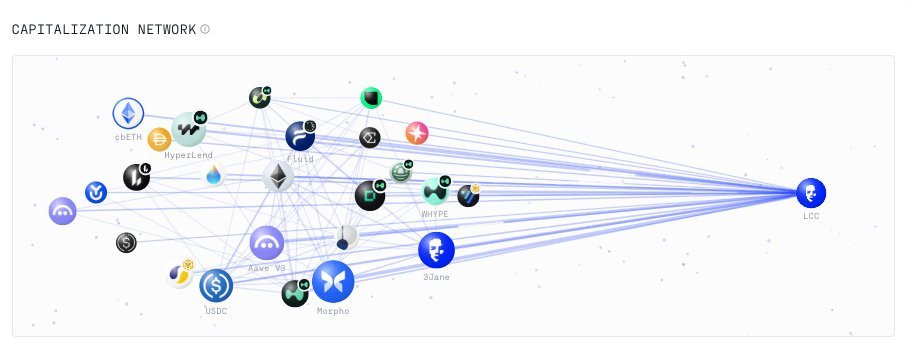
The protocol still cannot force money to appear programmatically but it can make performance more attractive than default whilst also making it attractive for replacement capital to step in for the yield premium.
LCC combines the capital efficiency and execution certainty of traditional finance with the scale and distribution advantages of DeFi. All components together replace traditional legal recourse with a protocol-level standardized cryptoeconomic guarantee using posted margin, allowing anyone to rent out their balance-sheet capacity.
A promise becomes a standardized financial object that can be syndicated globally and permissionlessly, and subsequently cleared programmatically.
Note that this game all hinges on the assumption that the trigger itself does not blow out the provider - their expected loss from the slashed margin has to be meaningfully greater than their expected loss from actually fulfilling the obligation. The leverage a promise can carry is set by what the trigger does to the promisor. A deployment call is a trade the provider wants: par entry into a yielding asset, a duration mismatch they are paid to bridge, etc. That kind of promise can run on thin margin. A loss payment is a trade nobody wants, so the margin has to approach the full obligation, which is effectively fully funded insurance. This explains why this game theory would have broken down with all predecessor use-cases.
The mechanics are in the docs.
The rabbit hole goes deeper. Once the promise exists, you can run fractional reserves against it - keeping more of your capital earning elsewhere while still collecting the promise fee on top.
Fractional reserves
Broadly speaking, fractional reserve is the practice of supporting claims on cash with less than their face value in cash and liquid reserve assets.
Before moving forward, I asterisk that banks have a superpower in that deposit liabilities function as money at par, supported by deposit insurance, lender-of-last-resort access, and membership in the payment system. That advantage applies to both deposits and commitments. A bank can initially fund a draw by crediting the borrower with a new deposit rather than finding the full amount in cash first. This is what enables money creation.
There are two versions of the liquidity problem. With deposits, cash has already been supplied and can be asked back. With commitments, cash has not yet been supplied and can be called forward. In both cases, the party making the promise manages liquidity against the amount likely to be demanded at once rather than the face value of every outstanding claim. Both ultimately ask the following question:
What share of the institution's gross promises must be immediately fundable under stress?
Deposits
A bank issues deposits payable at par on demand while holding assets that may mature years later. The deposit stays spendable while the bank's assets include five-year loans. This works because depositors generally do not show up all at once. The bank covers expected and stressed outflows rather than holding the entire deposit balance in cash.
Unfunded commitments
A bank can promise a borrower access to cash without handing over the cash on day one. It does not keep one dollar liquid for every dollar of undrawn credit. Instead, it manages liquidity against what the commitment book is expected to draw in normal and stressed conditions. For example, $100 of undrawn corporate credit adds $10 to the bank's modeled 30-day outflows. The borrower gets $100 of funding certainty while the bank’s liquidity buffer reflects only a fraction of that promise.
Once drawn, the off-balance-sheet commitment becomes a funded loan. The bank can initially credit the borrower with a new deposit, but it must still fund any cash that subsequently leaves the bank.
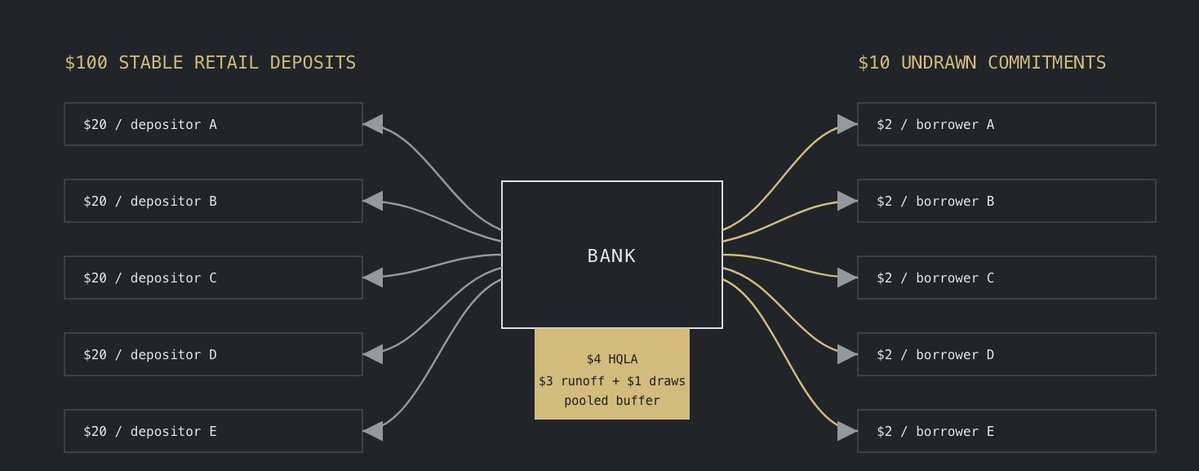
For banks subject to a liquidity coverage ratio (LCR), modeled withdrawals from deposits and draws on commitments enter the same calculation in terms of minimum high-quality liquid assets (HQLA) required:
HQLA >= deposits × runoff rate + commitments × drawdown rate
Selected assumptions per $1 of exposure might look like this:
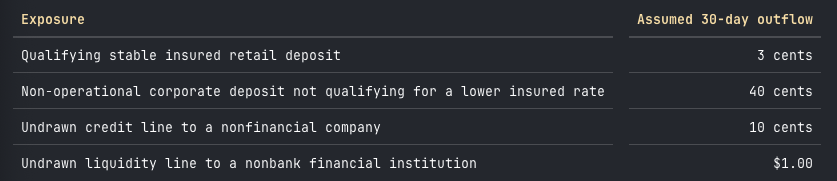
Similar to other entities within the broader shadow banking system such as insurance companies, MMFs, and open-ended credit funds - crypto protocols can issue onchain liabilities, but it does not have the power to create deposit money supported by deposit insurance and a central-bank backstop (banks like OpenReserve are increasingly making this statement untrue). A protocol that owes an external settlement asset still has to deliver it, so obligations must be met through cash, asset sales, borrowing, liquidity enhancements, or limits on withdrawals.
However, these structures can still recreate the contractual illusion of cash - they can run fractional reserves with liquidity transformation or unfunded obligations, without the backstop that makes the liability money.
Crypto :: Fractional Reserve Deposits
Fractional reserve on the deposit side emerged in crypto almost as quickly as stablecoins began to scale early as 2020 because (a) it is fairly trivial for capital formation to occur on crypto rails by relative standards (b) it is profitable and relatively trivial to redeploy that capital into illiquid assets (c) it is very trivial to claim that your liabilities are par-redeemable.
Sky is a strong example - USDS is a liquid dollar backed by a mix of reserves. ~21% of its backing is open-term crypto-backed lending on Spark and other venues where borrowers have drawn it. USDS is spendable but part of its backing has been lent to borrowers and accessing it depends on market liquidity, repayment, and liquidation.
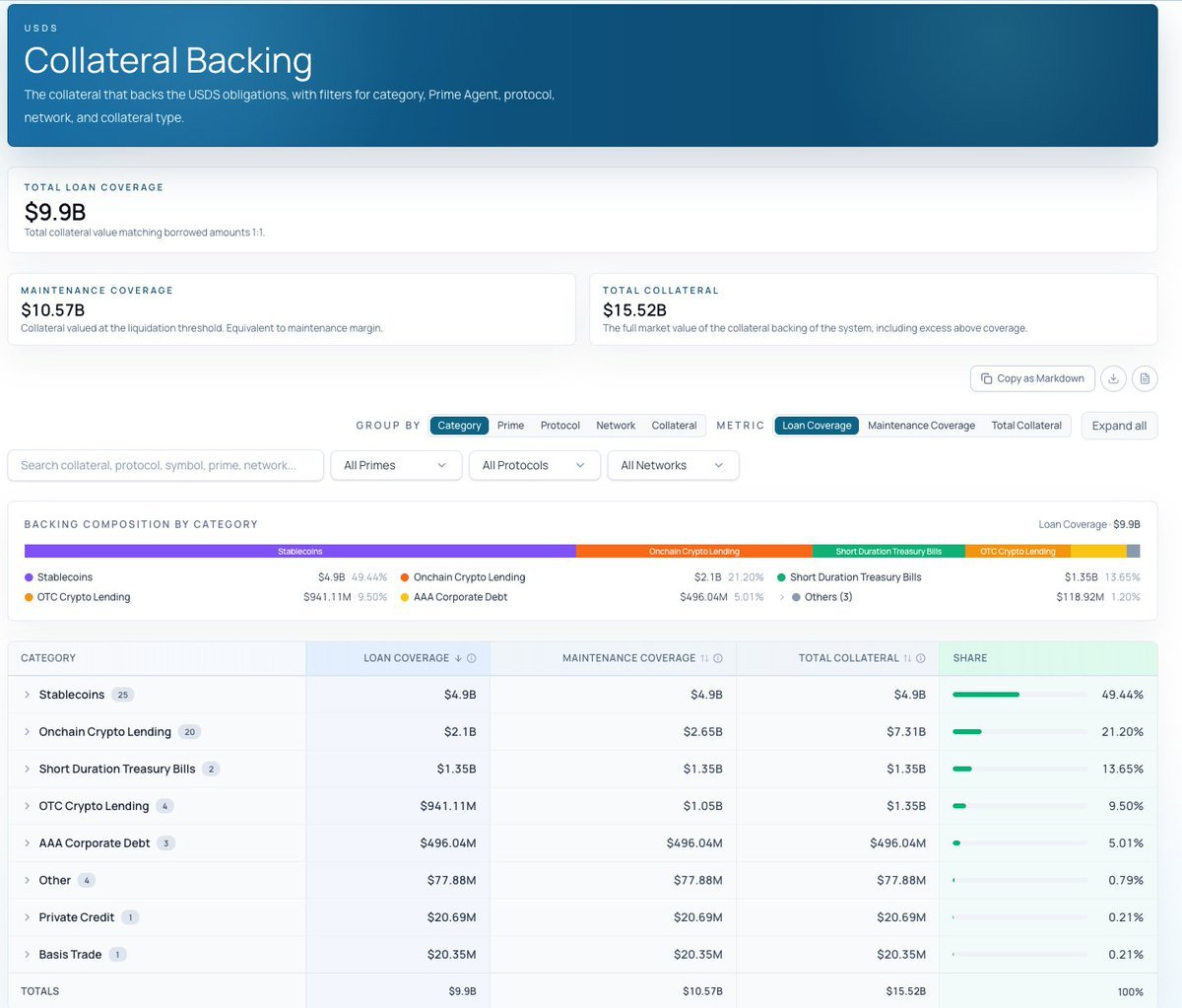
Sky is turning a portfolio of reserves into immediately usable dollar liquidity. Under the broad definition used, that is deposit-side fractional reserve and Sky appears to manage it responsibly and conservatively. There are several other examples of stablecoin products in crypto with varying degrees of how hot they want to run the liquidity ratio.
Crypto reached fractional reserves through deposit-like liabilities first. LCC brings the same balance-sheet game to commitments. Once capital can be credibly promised without being posted in full, the provider gets to decide how much of that promise to keep idle/liquid, how much to keep working elsewhere, and how much of it to have in the first place.
Crypto :: Fractional Reserve Commitments
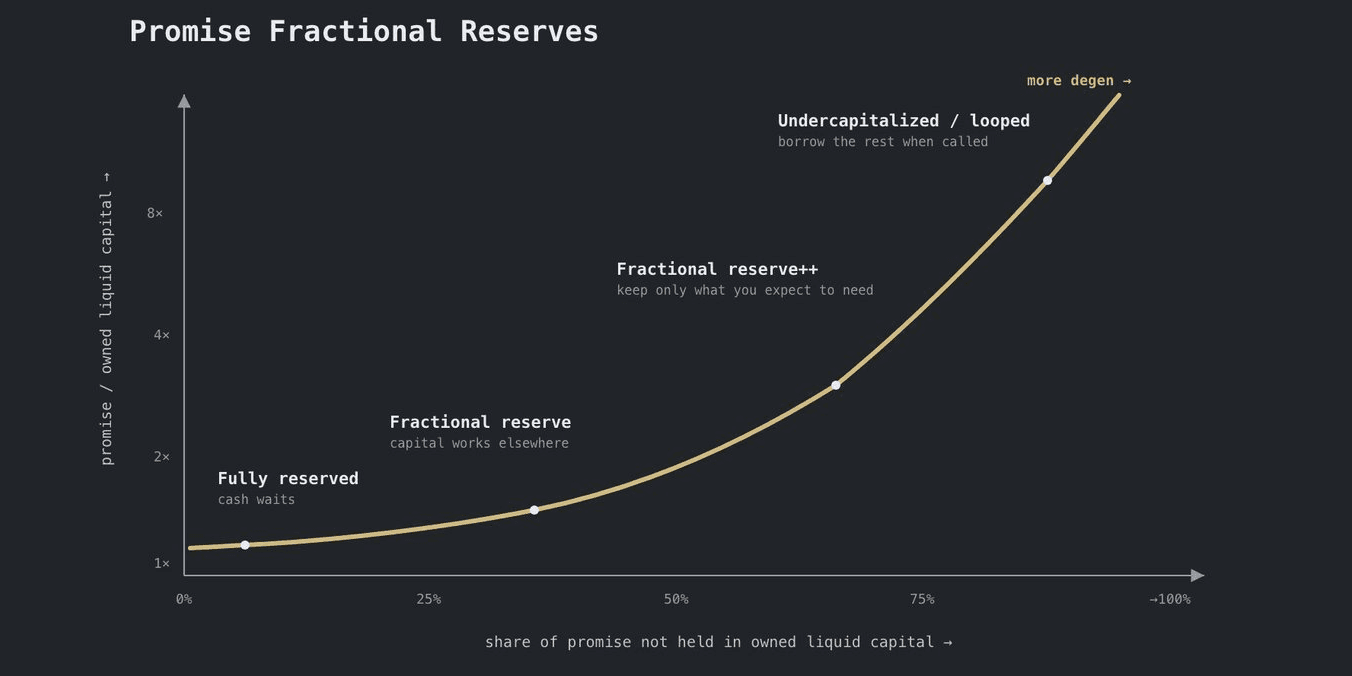
A promise is not inherently fractionally reserved. A provider can sell a $1m promise through LCC while keeping the full $1m in USDC outside the protocol. The promise becomes fractionally reserved when I begin deploying capital backing that promise productively, size by capital against my expectation of capital calls, and/or have it completely undercapitalized and reliant on external debt to fulfill the obligation.
Becoming your own shadow bank
Economically speaking, selling a promise makes you your own shadow bank. You get paid for making capital available, then decide how much liquidity to keep behind it. This is a personal decision.
At launch, 7.5% margin supports a promise 13.33 times larger, ~20.2% APY on posted margin. That is the return on the performance bond, not the provider’s whole balance sheet.
I can run the same $1 million promise a few different ways.
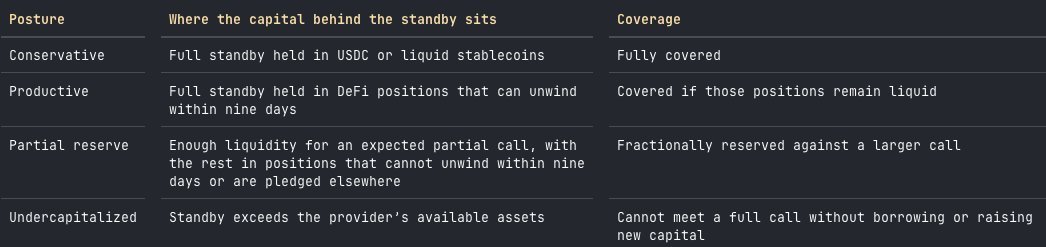
Fully reserved: I leave the entire $1 million in USDC or liquid stables. Boring, but the full call is covered.
Fractional reserve: I still own enough to fund it, but some of the money is earning elsewhere and may take time to pull back and has varying degrees of liquidity.
Fractional reserve++: I keep only enough cash for the call I think is coming. Now I am making a view on call size.
Undercapitalized / looped: I promise more than I own and plan to borrow the difference if called.
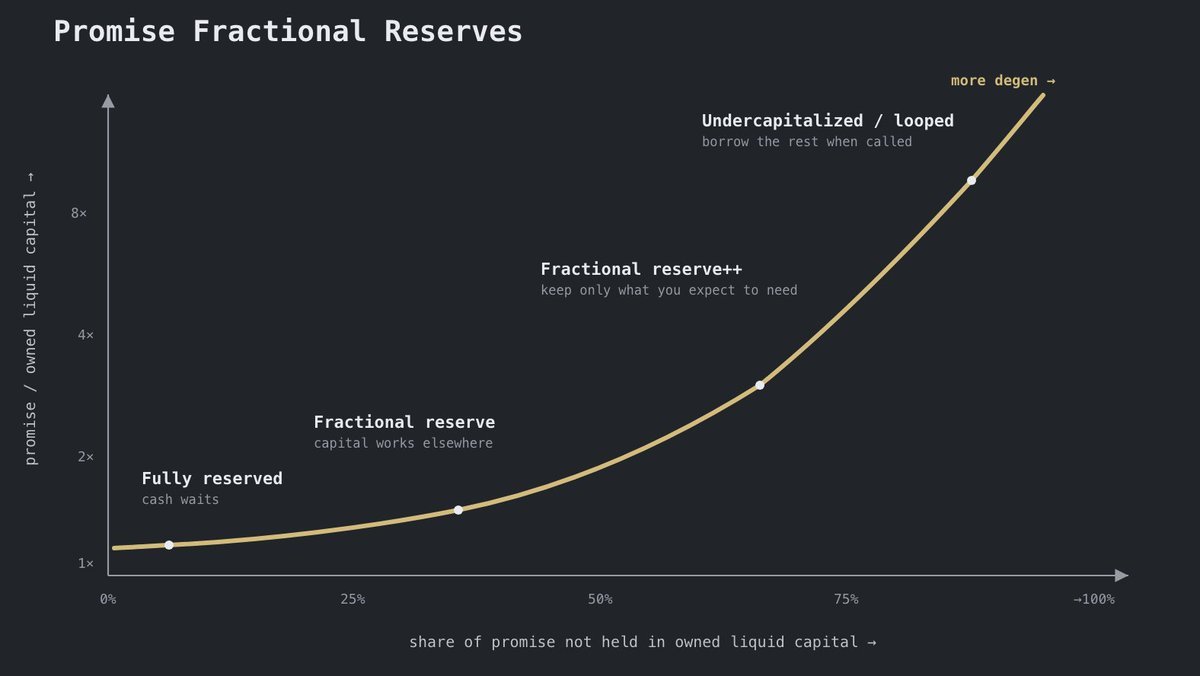
Once a promise becomes a credible financial object, you can build on top of it.
One can imagine where this goes.
Note: this is purely meant as an informational piece. This article is in not an endorsement of any particular way to run your own balance sheet.


